

Tree Canopy Assessment: What Wellington Residents Should Know |
New mapping and 154 recently planted native trees offer a clearer view of Wellington’s urban forest strategy. |
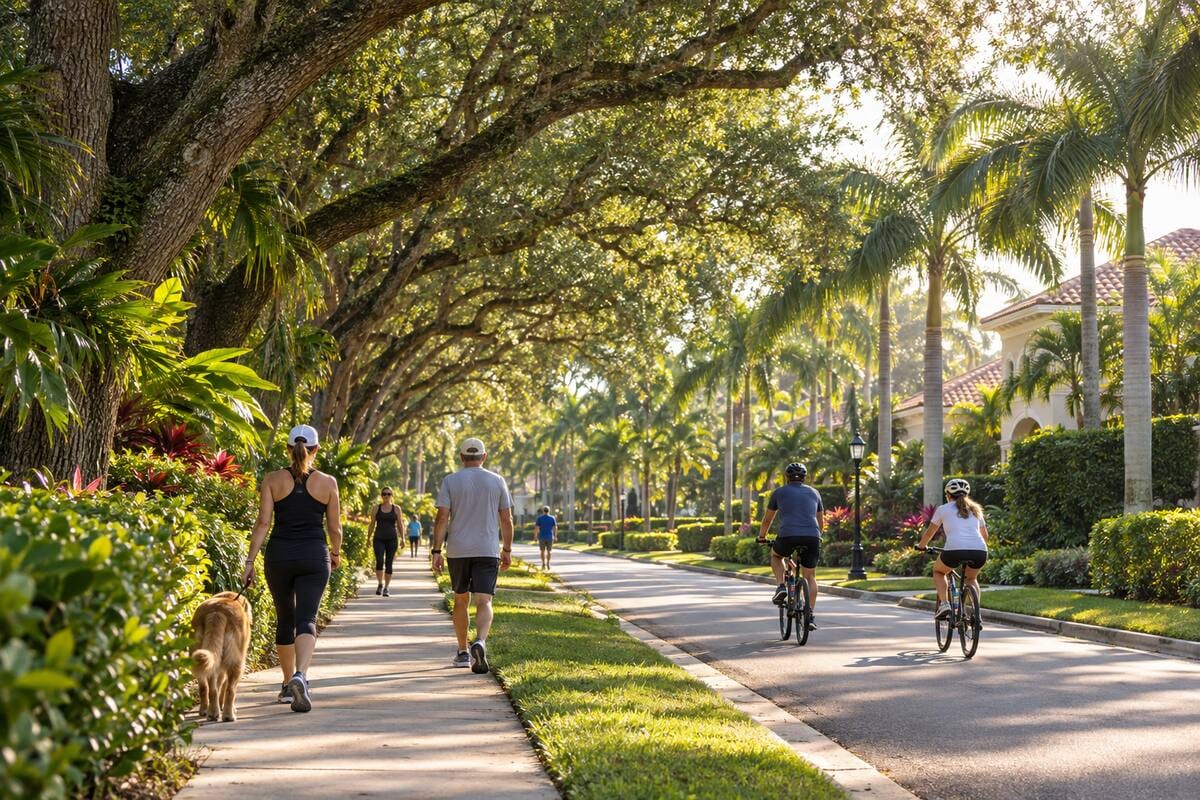
Wellington has finished a new tree canopy assessment, giving the Village a data-based way to track the community’s urban forest.
The mapping and analysis were announced February 27, 2026, as a tool for measuring benefits tied to air quality, carbon storage, stormwater runoff and the urban heat-island effect.
Those goals matter in a community where shade, drainage and storm resilience meet on the same block.
What the assessment can show
A tree canopy assessment uses mapped imagery and analysis to estimate where branches and leaves cover the ground, helping local planners compare coverage and identify potential planting space.
Wellington says it hired a local contractor with experience in environmental science, urban forestry and urban planning for the project.
The Village has not published a neighborhood-by-neighborhood results table in its announcement, so residents should not assume which areas gained or lost the most canopy.
What is confirmed is the purpose: establish measurable information that can support future decisions about coverage and environmental benefits.
The official assessment announcement frames the work as a baseline for improving Wellington’s urban forest rather than a finished planting plan.
A recent planting project adds context
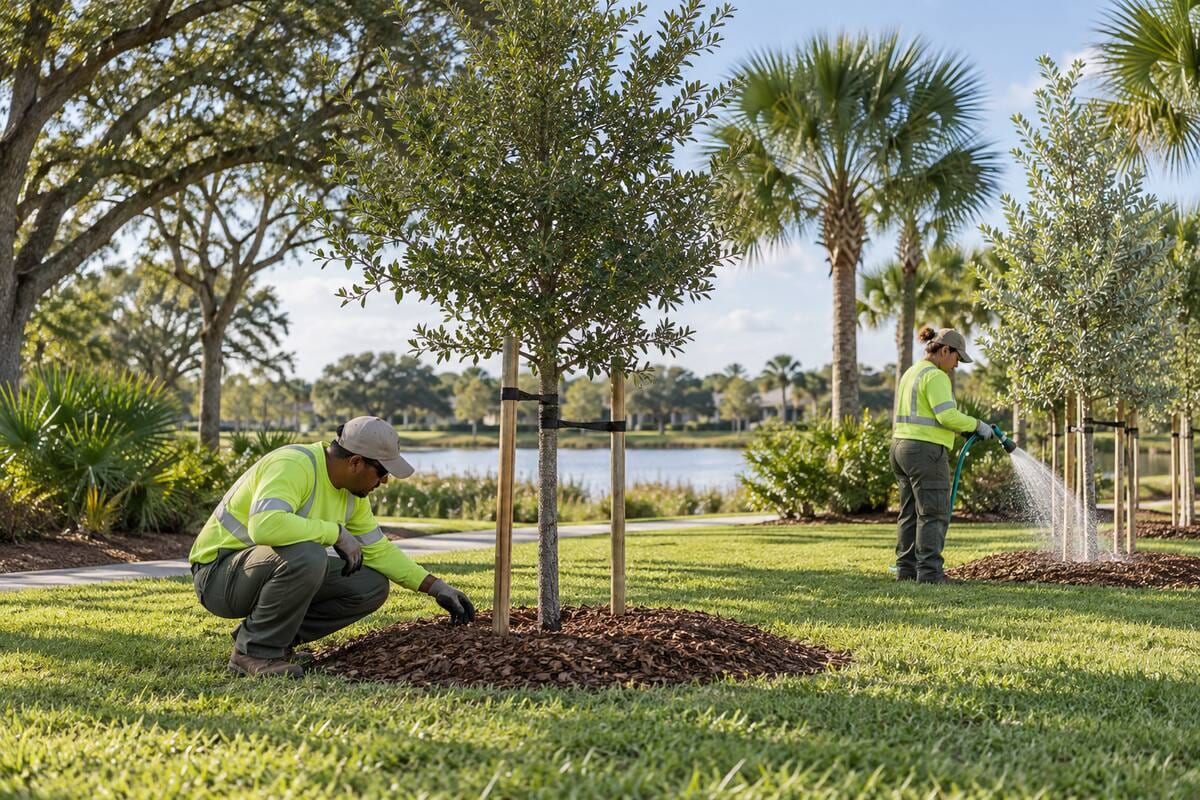
In August, Wellington separately reported completing a $50,000 Urban and Community Forestry grant project designed to replace trees lost during recent hurricanes.
The project added 154 Florida native trees on a Village-owned site, including sabal palm, Densa pine, green buttonwood, live oak, satin leaf, pigeon plum and wild tamarind.
That list illustrates a practical point: a resilient canopy is not one species repeated everywhere.
The Village emphasized wind resistance, shade, water and air quality, and stormwater benefits in its grant completion notice. |
 |
Why species diversity matters
Wellington’s Urban Forest Management Plan identifies flooding, wind damage, pests and plant diseases among the risks facing local trees.
It recommends greater diversity and favors trees suited to anticipated conditions, while calling for canopy analysis every two to five years.
UF/IFAS guidance reaches a similar conclusion: mixing species can spread the risk from storms, insects and disease, but tree choice alone is not enough.
Placement, rooting space and long-term maintenance still determine whether South Florida shade trees become durable assets or future problems.
What residents can do at home
Before buying a tree, compare its mature height and crown spread with the available space, overhead lines, pavement, drainage and nearby structures.
Check soil and sunlight conditions, confirm any homeowners association or permit requirements, and call 811 before digging where underground utilities may be present.
A Florida native tree can be well adapted to the region, but native does not mean suitable for every yard or every planting spot.
Residents can use the UF/IFAS tree selection guidance to compare site needs rather than choosing only by appearance or online popularity.
For an established tree, avoid improvised storm pruning and seek a qualified arborist when health, structure or proximity to a building raises concern.
What to watch next
The most useful next step would be a public presentation of the canopy results, including coverage, plantable areas and how the new baseline will guide projects.
Until more data are released, the assessment should be understood as planning infrastructure, not proof that every neighborhood already has adequate shade.
For residents, the immediate takeaway is simple: the right tree in the right place contributes to a stronger canopy block by block. |
15 Comments
Join the conversation
The mix of native trees makes sense. Live oaks provide shade, but they need enough room to grow.
Agreed, live oaks can provide wonderful shade when planted where they have room to mature. The mix of native species also helps avoid relying on one kind of tree.
Tasha B.Agreed. A live oak is great shade, but I wouldn’t want one squeezed between a sidewalk and a driveway.
A baseline is fine, but measuring canopy won’t do much unless the Village follows it with a planting plan.
That’s a fair point. The assessment establishes a baseline for future decisions, but the Village has not presented it as a finished planting plan.
I’m curious whether the mapping shows planting space near sidewalks, where a little more shade would help people walking.
The mapping can help identify potential planting space, but the announcement doesn’t provide sidewalk-level findings yet. Those details would be useful for understanding where more walking shade is possible.
Renee P.That would be useful. Some of the walks near me have plenty of sun and very little shade by lunchtime.
Our street lost a lot of shade after the hurricanes, so I’m glad replacement trees are part of the plan.
We’re sorry your street lost so much shade. The separate grant project was intended to replace trees lost during recent hurricanes, though the Village hasn’t said where future planting might happen.
Planting 154 native trees is a good start. I’d like to know how the Village plans to care for them as they grow.
Dave ThompsonGood question. I’d like to know who handles watering and checks on the trees during their first couple of years.
That’s an important question. The Village’s grant notice describes the 154 trees planted, but it doesn’t detail a long-term care plan.
The canopy assessment sounds useful, but I hope Wellington publishes the neighborhood results so residents can see where shade is needed most.
Maria G.I hope they share the neighborhood numbers too. It would help residents understand where future planting might make the biggest difference.