

Wellington Tree Trimming and Removal Permits: A Homeowner Guide |
What residents should know about the 25% rule, removal permits and replacement landscaping |
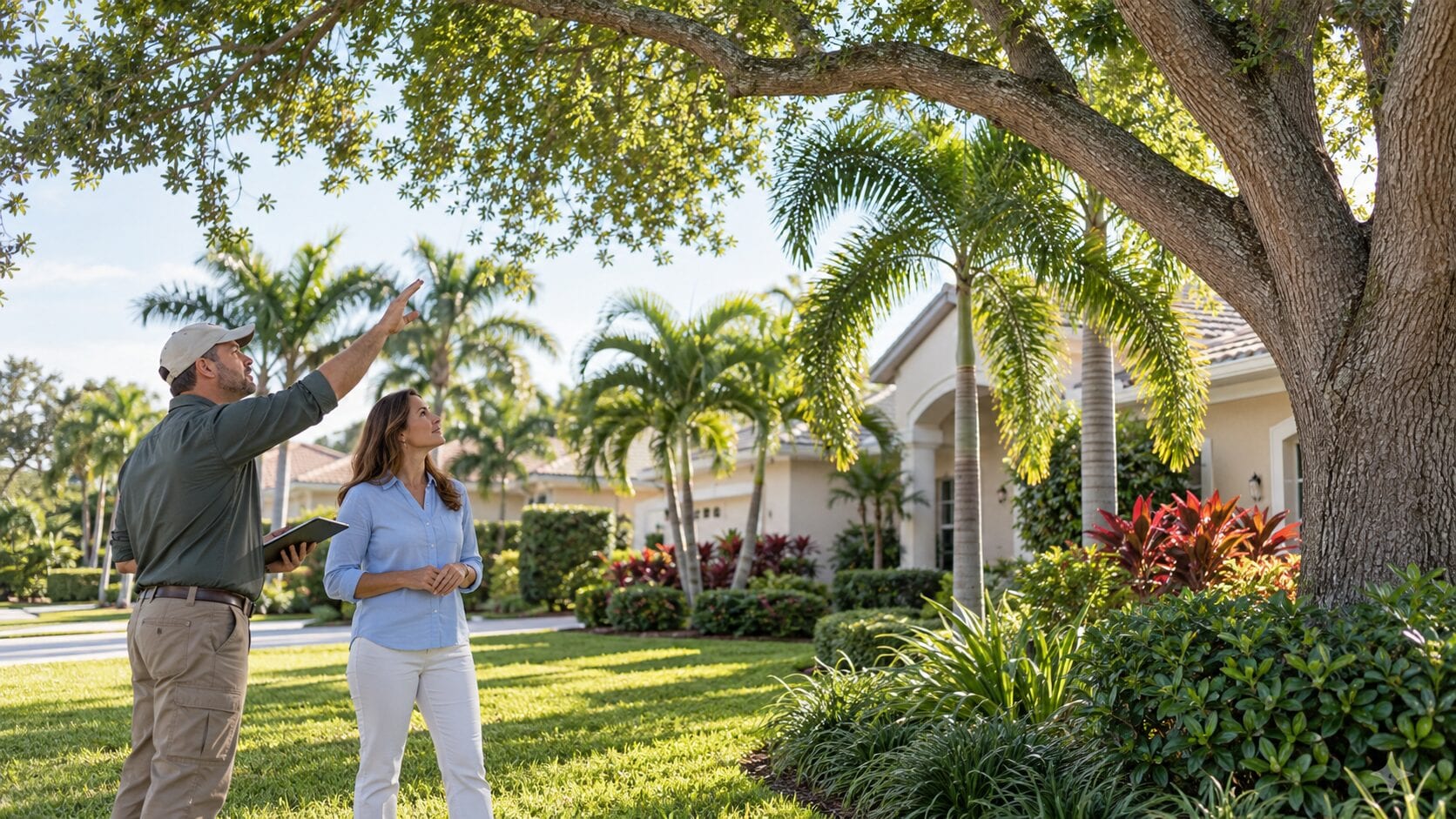
Tree work can look routine until a homeowner learns that Wellington regulates trimming, removal and replacement landscaping.
The Village’s current landscape regulations distinguish ordinary maintenance from work that requires a permit.
This guide summarizes the published rules for residents, but it does not replace a property-specific answer from Village staff.
The 25% trimming limit
Wellington says a resident may trim up to 25% of a tree or palm without a removal permit.
The work still must be performed properly so the plant remains healthy and structurally sound.
Over-trimming is not permitted and may lead to required removal and replacement as well as possible fines.
That distinction matters for palm tree trimming, major canopy reduction and projects that could permanently change a tree’s health or shape.
Before approving a large pruning job, homeowners should ask the contractor what percentage of living material will be removed and how the proposed cut protects the tree’s structure.
If the scope is unclear, contact Wellington before work begins.
Removal requires Village approval
The Village states that removing a tree or palm requires a Tree/Vegetation Removal Permit.
Its online request page warns residents not to remove trees until the permit has been issued.
The application page explains that staff reviews the submission and then sends an invoice by email.
An invoice is not generated automatically, and applications submitted after business hours or on weekends are handled during normal working hours.
Village review begins after payment is received.
Residents should keep the approval and related correspondence with their property records and confirm whether replacement planting is part of the permit conditions. |
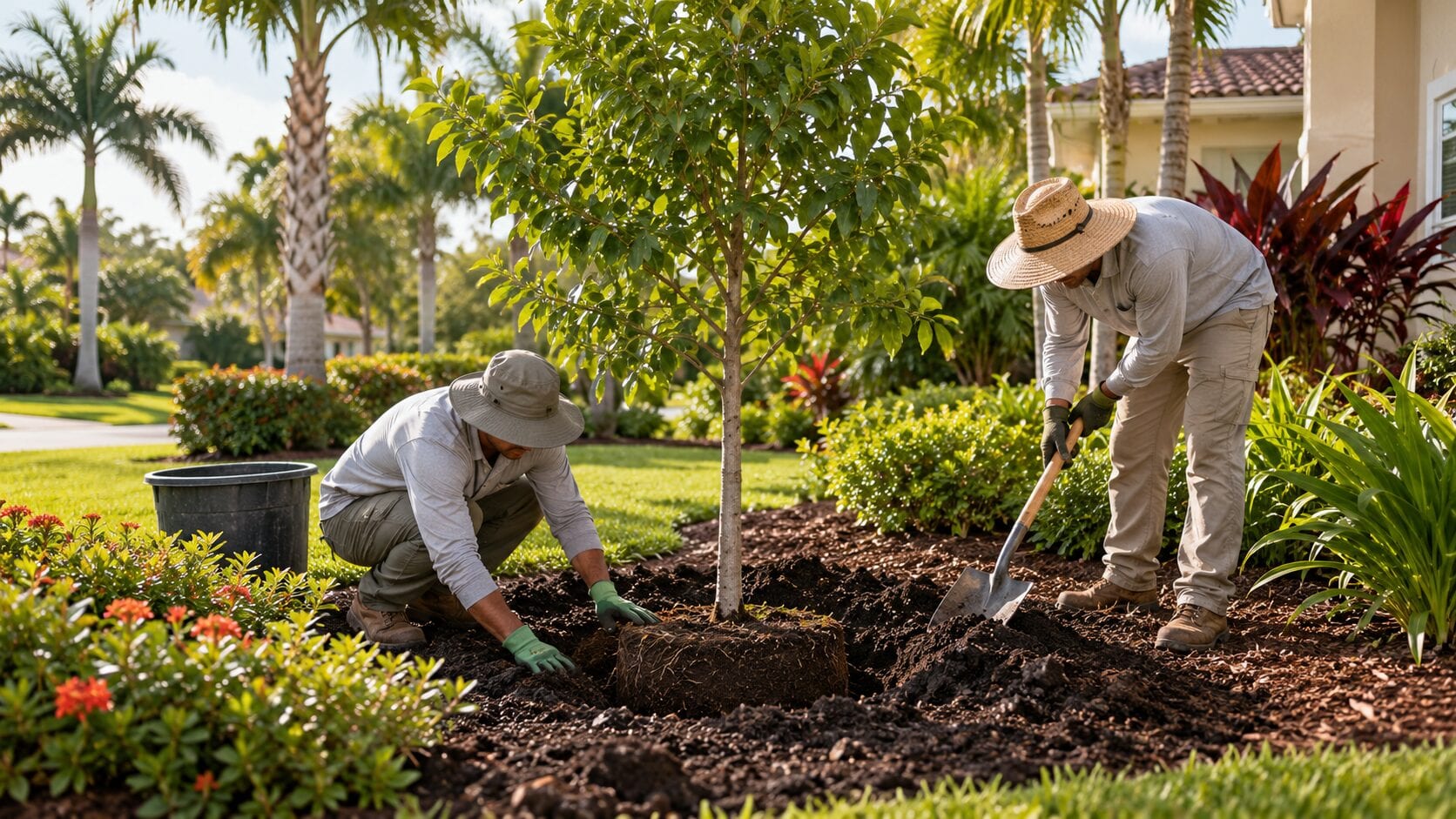 |
Fruit trees are allowed, but Wellington says they do not count toward minimum landscape requirements and also require a permit for removal.
Landscaping must remain healthy and complete
Wellington requires properties to maintain landscaping such as trees or palms, shrubs, groundcover and sod or grass.
The Village says grass, hedges and shrubs should remain healthy, neat and appropriately trimmed, with dead material removed and mulch replaced as needed.
Decorative pots may supplement a yard, but most required landscaping should be planted in the ground.
Properties without required front-yard landscaping may face fines or liens.
The Village’s recommended-species list includes native options such as green buttonwood, live oak, gumbo limbo, slash pine, bald cypress, red maple, pigeon plum and dahoon holly.
The list is guidance rather than a complete inventory, so confirm the correct replacement species, size and location for the specific property.
Hedges, neighbors and street-facing areas
If a neighbor’s branches or hedge cross a property line, Wellington says the encroaching portion may be trimmed.
The Village recommends talking with the neighbor and checking whether a vegetation permit is needed, especially when significant trimming could harm the plant or create structural problems.
Trash bins visible from the street must be screened, and approved hedge material is one suggested option.
Hedges are generally required along road-facing fences.
For properties whose side or rear lines abut Forest Hill Boulevard, Wellington Trace, Big Blue Trace, Birkdale Drive or Greenview Shores Boulevard, the Village says an approved hedge row should be in place by December 31, 2026.
A practical sequence before tree work
Photograph the tree, define whether the project is trimming or removal, review the Village page and obtain written permit confirmation when required.
Ask the contractor to describe the pruning percentage, disposal plan and any replacement planting.
When uncertainty remains, call Wellington Planning and Zoning at 561-791-4000 before authorizing the work.
The accompanying images are AI-generated concepts and do not show actual Wellington properties, residents, contractors or code inspections. |
13 Comments
Join the conversation
Good reminder that an emailed invoice isn’t approval. I’d wait for the actual permit before letting a crew take down a tree.
Exactly, an emailed invoice is not a removal permit. The Village tells residents to wait until the permit is issued before removing a tree or palm.
We kept the permit paperwork when we removed a damaged tree last year. It came in handy when we asked about replacement planting.
Glad you kept it. The permit and related correspondence can be useful when sorting out replacement-planting requirements.
Rob M.We kept ours too. It was much easier to check the replacement requirements with the paperwork in front of us.
Does the 25% limit apply the same way to palms? It’s hard to tell how much is too much when removing fronds.
Yes, Wellington’s published 25% limit applies to palms as well as trees. If you’re unsure how the proposed frond removal measures up, check with the Village before work starts.
Nina PatelThe article says the 25% limit applies to palms too. I’d check with the Village before removing a lot of green fronds.
Waiting for payment before the Village even starts reviewing a removal request seems slow. Has anyone gone through it recently?
We understand the concern about timing. The Village says staff sends an invoice after reviewing the submission, and permit review begins once payment is received. We can’t speak to recent turnaround times.
I’m glad they spelled out the 25% trimming limit. I’ll be asking our tree guy how much he plans to cut.
Maria G.Good idea. I’d ask him to point out which branches he plans to cut before he starts.
That’s a good question to ask before work begins. The Village also says trimming must leave the tree healthy and structurally sound.